 CrateEdit Pro
Open format transitions: moving between genres and tempos without losing the floor
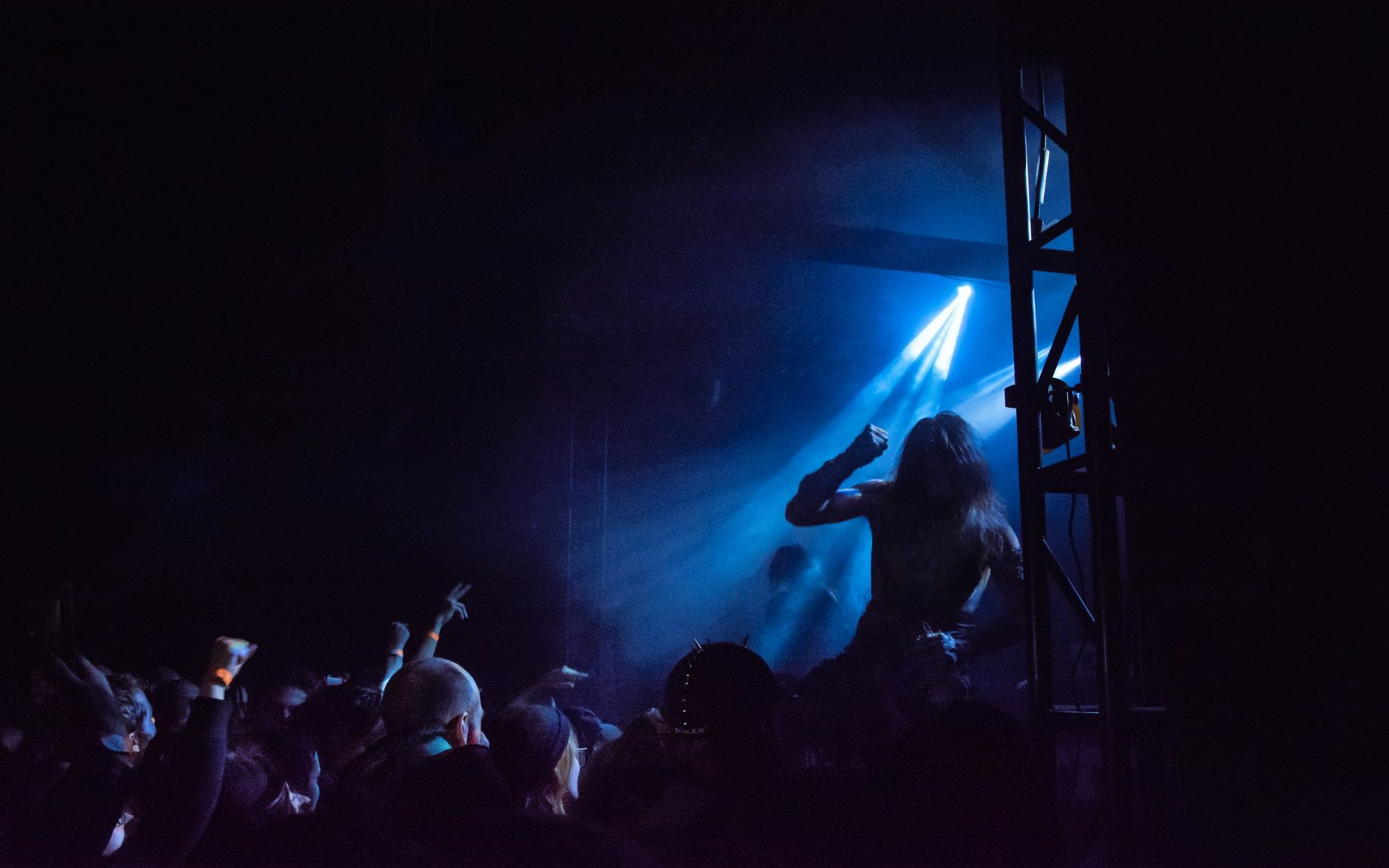
An open format floor wants the next song, whatever its tempo.
Photo: Steve Harvey on Unsplash
An open format night can go from hip-hop at 95 BPM to house at 128 and back to trap at half time. The songs aren’t the hard part; the joins are. Here are the tempo bridges that work, the jumps that don’t, and the moves for the gaps in between.
The shape of a night
Most of an open format set is blends: a few BPM at a time, track to track. The big moves come a few times a night, and each one needs a different trick.
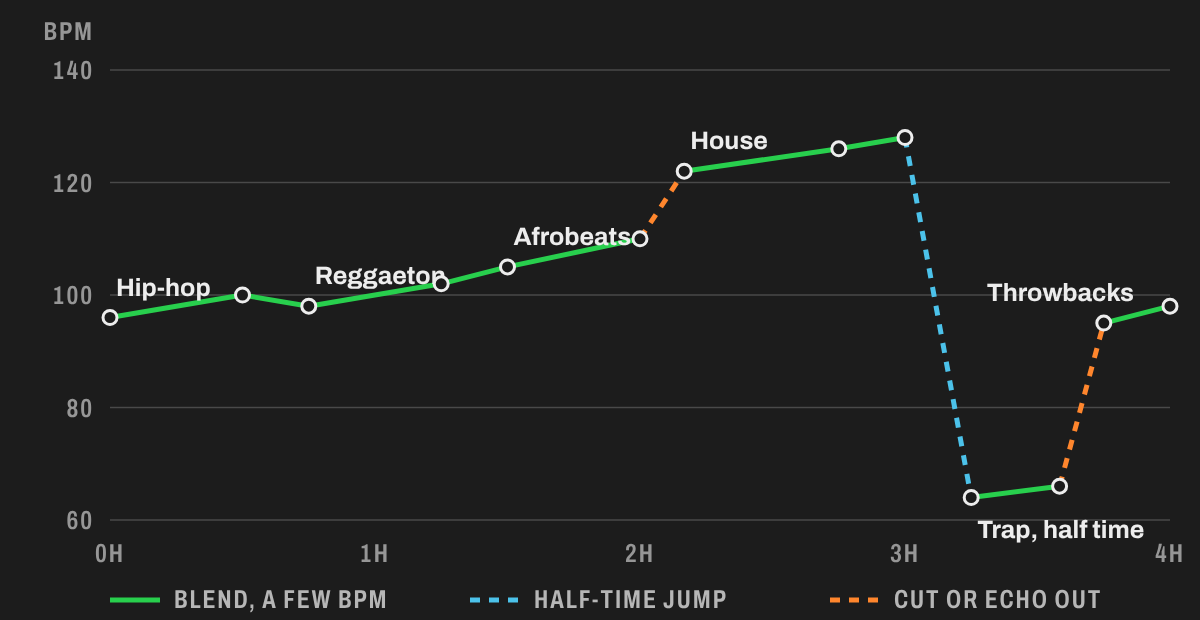
A four-hour open format night, made up for this page. Green lines are blends, the blue one a half-time jump, the orange ones cuts or echo outs.
Blend: a few BPM at a time
- Stay within about 5%. Digital DJ Tips’ rule of thumb is to pitch a track no more than 5% up or down while you beatmatch. At 100 BPM that’s 95 to 105.
- Meet in the middle. Going from 120 to 126, mix at 123: each track moves only half as far, and neither sounds stretched.
- Key lock for the bigger moves. It keeps the pitch while the tempo changes, but the sound suffers the further you go from the track’s own tempo. Ride the new track back toward its real BPM after the mix.
- Move slowly. Nudge the tempo over a minute or two between mixes, not in one jump on the “one”, and the floor won’t notice.
Half time and double time
A track at exactly half or double the tempo lines up beat for beat: two bars of the fast one fit one bar of the slow one. So 128 house can drop into 64 trap, and 70 into 140, with no pitch change at all.
| BPM | For example | How |
|---|---|---|
| 96 to 100 | Hip-hop into reggaeton | +4%, blend |
| 120 to 126 | House into house | meet at 123, about 2.5% each |
| 110 to 122 | Afrobeats into house | +11%, echo out or cut |
| 128 to 64 | House into trap | half time, no change |
| 70 to 140 | Slow jam into drill or dubstep | double time, no change |
| 130 to 174 | House into drum and bass | 3 to 4 loop |
Tempo bridges and what each needs. Percentages are the pitch change on the incoming track.
Count the phrases in the slow track’s bars: four bars at 64 last as long as eight at 128. There’s more on counting in Phrasing 101.
The jumps no blend covers
From 110 to 122 is 11%, too far to pitch without someone hearing it. These are the moves for that.
- Echo out. Bring a delay up on the outgoing track over 8 to 16 bars, cut its bass, stop it, and start the new one into the echoes.
- Beatless joins. Fade a breakdown into an intro of pads, a vocal or an effect. With no beat on either side, tempos don’t clash.
- The cut. Drop the new track straight on its hook, or kill the sound for a beat and start fresh. Save it for the big moments.
- A 3 to 4 loop. 130 and 174 BPM sit at a three to four ratio, so a three-bar loop of the slower track fits four bars of the faster one. James Zabiela’s trick, and it needs sure counting.
Keys still matter
A tempo bridge that lands in a clashing key still sounds wrong. Pick the next track in a key next to the one playing on the Camelot wheel, or let the beat carry the join and keep the melodies apart. Our guide to the Camelot wheel covers it.
If you prep with CrateEdit Pro
Next Track ranks the tracks in a crate against the one that’s playing, by key, tempo and energy, so the ones within a blend are on top. Set Builder orders a whole crate for the energy shape you choose. Both read the keys and BPMs your library already has. Our guide to picking the next track has the steps.
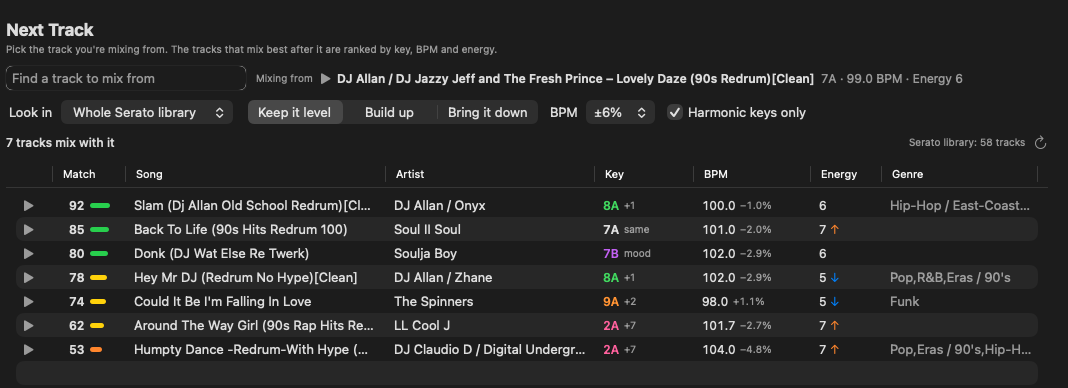
In CrateEdit Pro. Next Track: the tracks that mix after the one playing, ranked, with the pitch each one needs.
Sources
- 7 insider tips for making exciting tempo changes while DJing, Digital DJ Tips, updated March 27, 2018.
- Easy trick for mixing different genres using half and double time BPMs, Digital DJ Tips, June 13, 2019.
- 5 ways to change tempo in your DJ set, MusicRadar, March 12, 2024.
- DJ tempo change techniques, DJ.Studio.