 CrateEdit Pro
From two turntables to stems: a short history of the hip-hop DJ
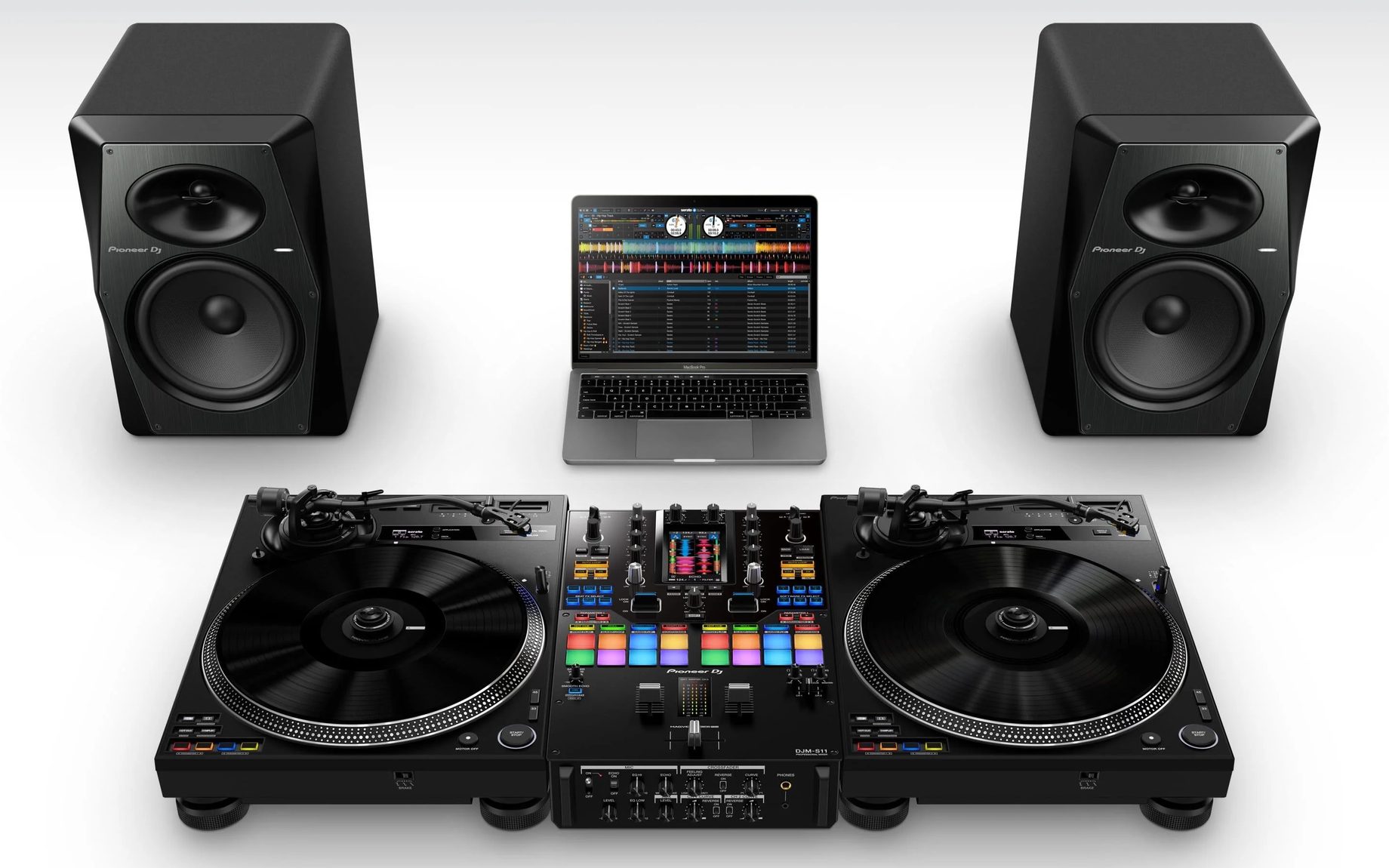
Two turntables, a mixer and a laptop. A hip-hop DJ setup today: Pioneer DJ PLX-CRSS12 turntables, a DJM-S11 mixer and Serato DJ Pro.
Image: AlphaTheta
Every tool in a DJ’s bag answers a problem a DJ once had in front of a dance floor. Here’s how the craft got from two copies of the same record in a Bronx rec room to stems on a laptop, and the gear that made each step possible.
- 1972Technics introduces the SL-1200 turntable.
- 1973DJ Kool Herc loops the breaks at 1520 Sedgwick Avenue.
- 1979The SL-1200 MK2: the DJ turntable for decades to come.
- 1980The Roland TR-808 drum machine.
- 1981Wheels of Steel: scratching on a record.
- 1988The Akai MPC60.
- 2001The CDJ-1000 makes CD players scratch.
- 2004Serato Scratch Live: records that play a laptop.
- 2022Real-time stems in Serato DJ.
- 2026Serato DJ 5 and flexible Lucid Beatgrids.
Fifty-odd years in ten steps. Each one is told below.
1973: two copies of the same record
On August 11, 1973, DJ Kool Herc played a back-to-school party for his sister Cindy in the recreation room of 1520 Sedgwick Avenue in the Bronx. He had spent months on an idea: play the frantic drum breaks at the start or in the middle of a record, the part the dancers waited for, and keep them going with two turntables, a mixer and two copies of the same record. His friend Coke La Rock rapped over it.
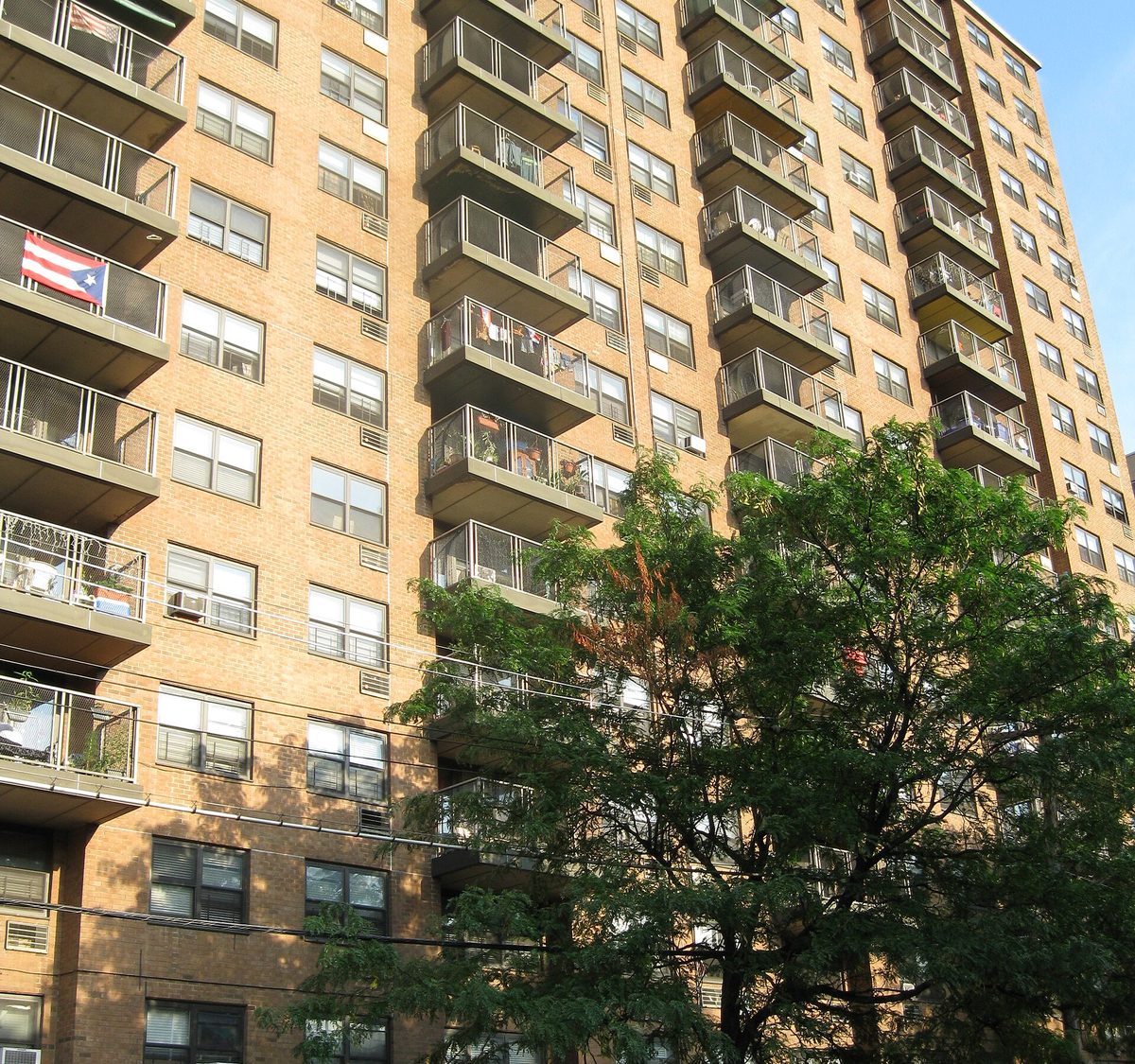
1520 Sedgwick Avenue, the Bronx. The party was in the building’s recreation room.
Photo: Bigtimepeace, public domain, via Wikimedia Commons (cropped)

In 2007 New York State’s Office of Parks, Recreation and Historic Preservation recognized the building as the birthplace of hip hop. It wasn’t the only place things were happening, but it’s where a pivotal night happened.
The headphones and the mixer: the quick mix
Grandmaster Flash turned the idea into a method. He played the break on one record while he found the same spot on the other in his headphones, then switched over with the mixer when the first one ran out, so a short phrase could loop for as long as the floor wanted it. He called it the Quick Mix Theory. He also cut very short pieces, usually horn hits, rhythmically over a running beat, a move known as punch phrasing.
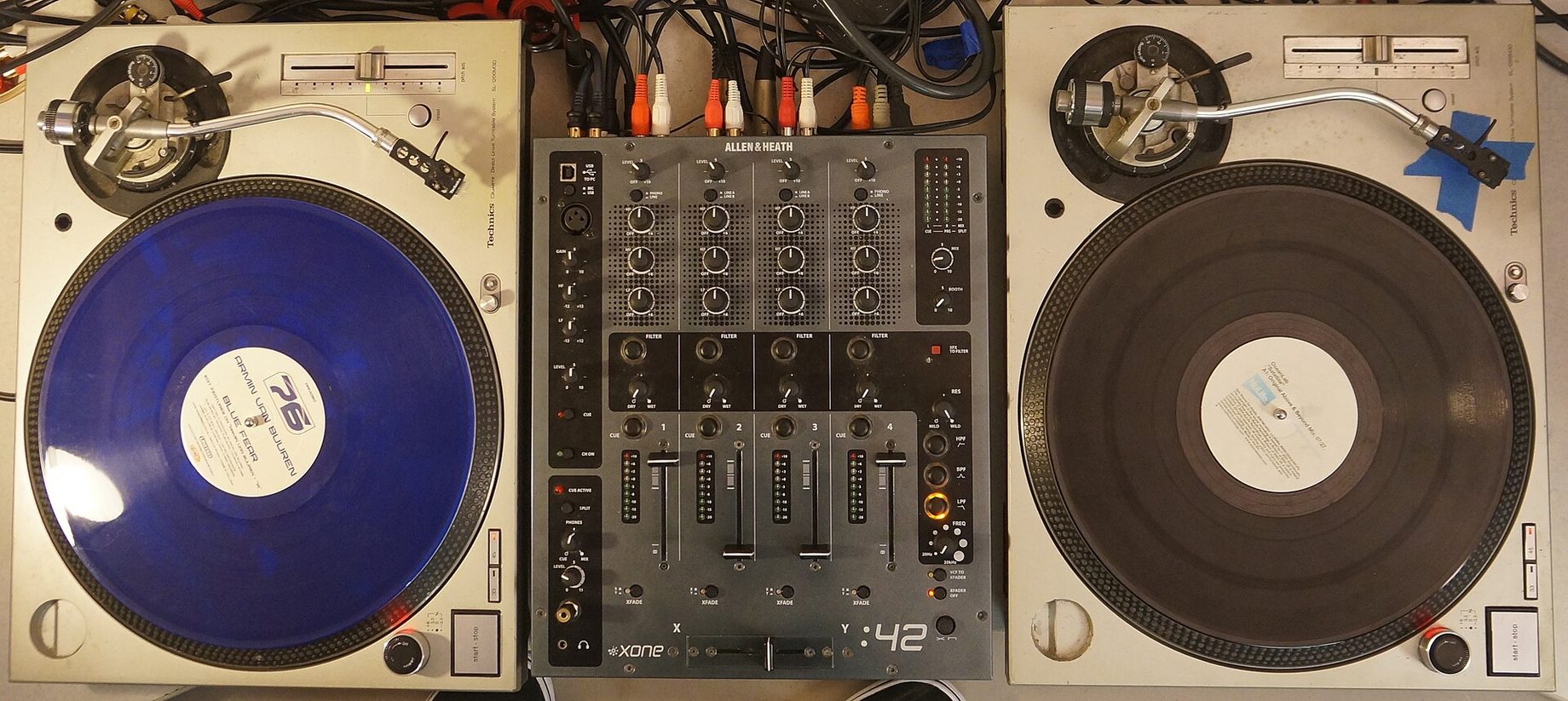
Two turntables and a mixer. Flash’s method in hardware: a record on each deck, headphones to find the spot, the mixer to switch.
Photo: FASTILY, CC BY-SA 4.0, via Wikimedia Commons

That’s still the job, fifty years on: find the moment in your headphones, line it up, bring it in on the beat.
The scratch
Pushing the record back and forth under the needle as a sound of its own is generally credited to Grand Wizzard Theodore, in the late 1970s. Flash perfected it and took it to new audiences: his 1981 record The Adventures of Grandmaster Flash on the Wheels of Steel is the first documented scratching on a record.
The turntable that made it a craft
Technics introduced the SL-1200 in October 1972. The MK2 of 1979 is the one that stuck: its direct-drive motor held its speed even with a record being pushed around on a slipmat, it stopped as quickly as it started, and its pitch control became a slider. Since 1979 the MK2 and the models after it have been the most common DJ and scratch turntables in the world.
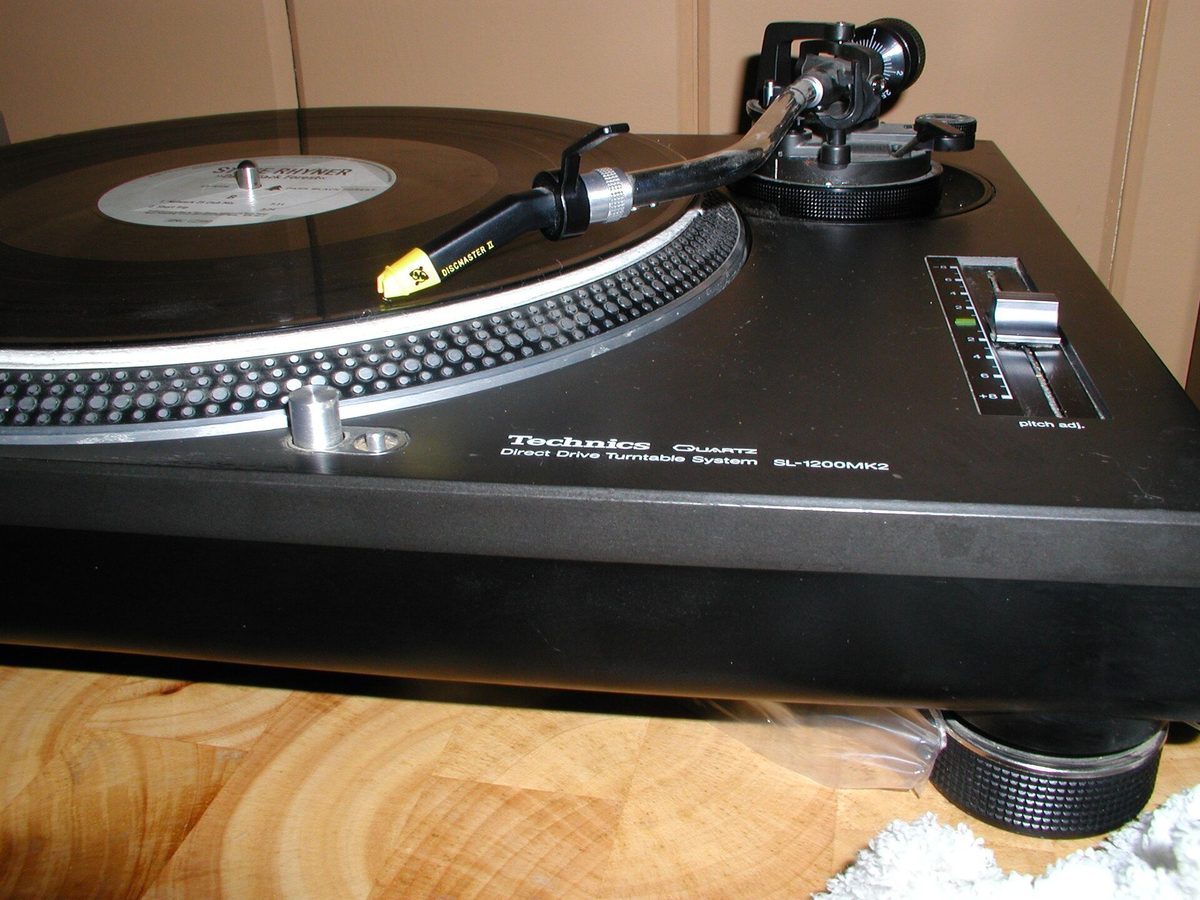
A Technics SL-1200 MK2, the 1979 model: the direct-drive motor and the pitch slider that made it the DJ’s turntable.
Photo: Adrian DuMay, CC BY 2.0, via Wikimedia Commons

Panasonic stopped making Technics turntables in 2010 and brought the SL-1200 back in 2016.
The beat machines: the 808 and the MPC
The Roland TR-808 came out in 1980 at $1,195, and Roland stopped making it in 1983. Its bass drum, a sine wave through a filter, became central to hip hop after Planet Rock in 1982. Rick Rubin stretched it out and tuned it into basslines. Producer Hank Shocklee put it plainly: it’s not hip hop without that sound.
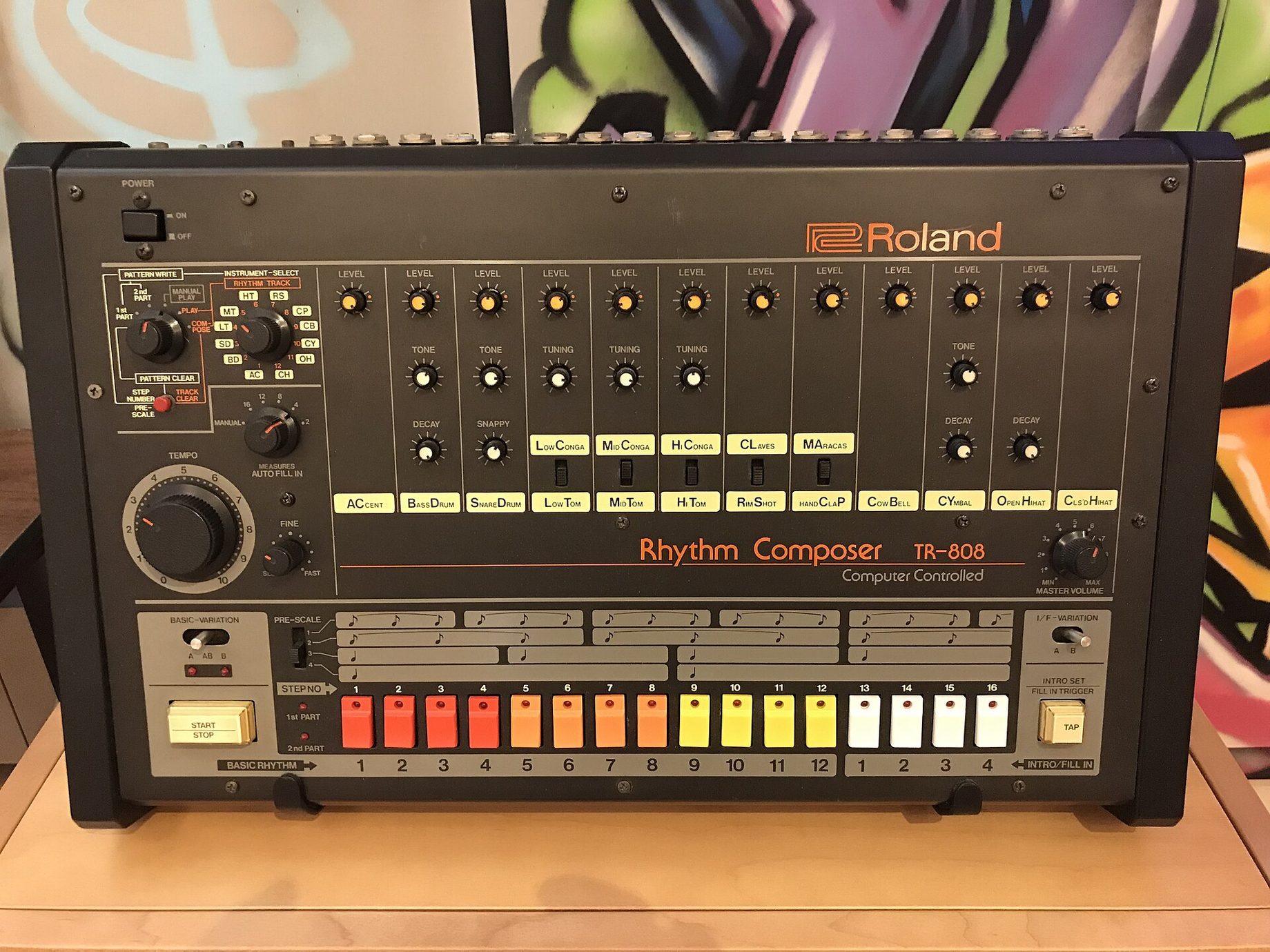
A Roland TR-808 at the Musical Instrument Museum in Phoenix.
Photo: Bryan Pocius, CC BY 2.0, via Wikimedia Commons

Akai’s MPC60 followed on December 8, 1988, at $5,000, designed by Roger Linn. Its pads let producers sample short sounds and play them like a drum kit, or loop longer pieces of a record. DJ Shadow made Endtroducing on an MPC60 MkII, and J Dilla turned the quantize off to get his loose, off-the-grid feel.
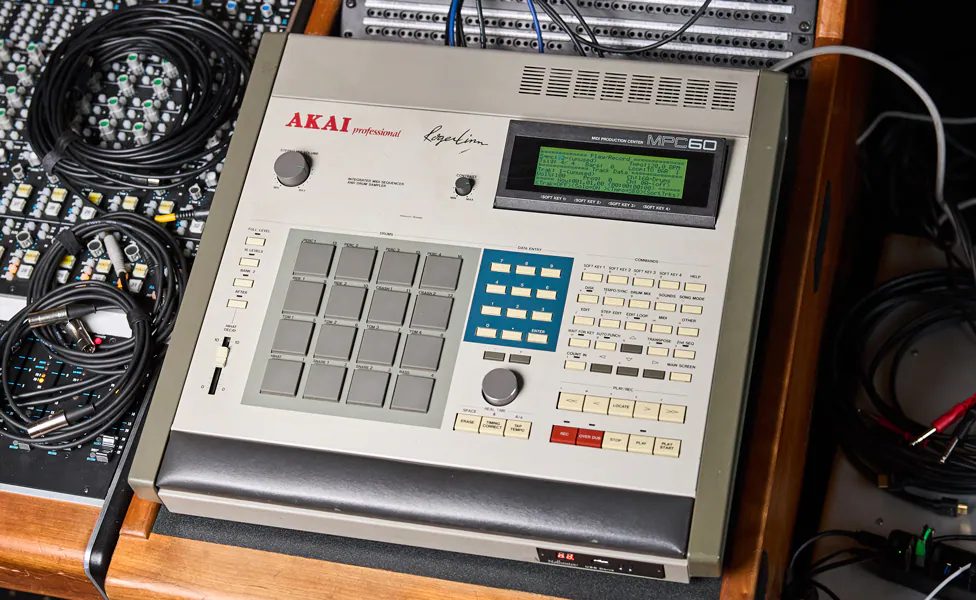
The Akai MPC60. Sixteen pads, a sampler and a sequencer in one box.
Image: Akai Professional
The mixtape years
Through the 1980s and 1990s a DJ’s mix travelled on cassette, copied and passed hand to hand, and later on CD. A tape was how a DJ got heard outside the room, and the handwritten track list was half the appeal.
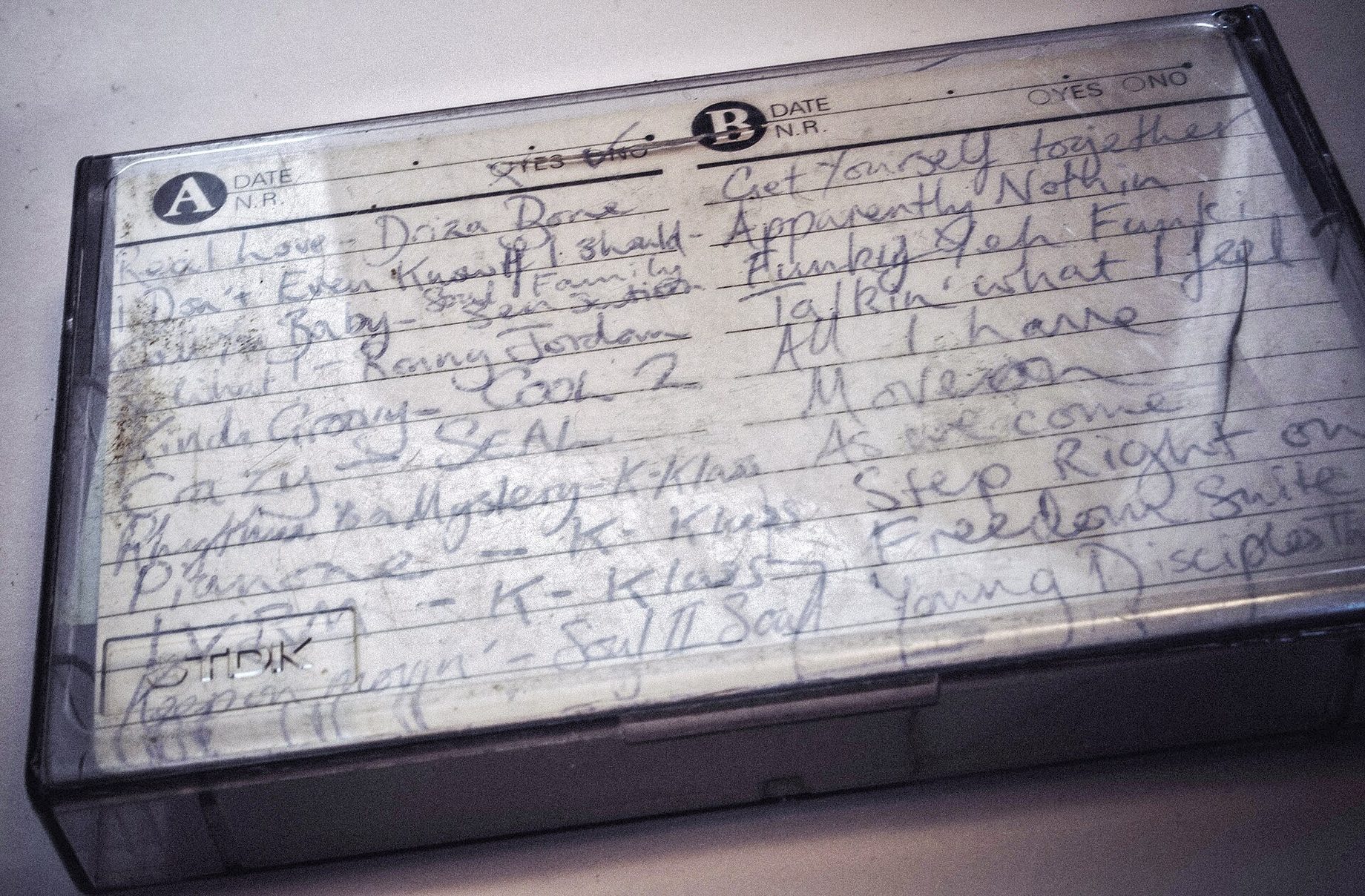
A mixtape from around 1991. Side A, side B and the track list in pen.
Photo: antony_mayfield, CC BY 2.0, via Wikimedia Commons

CDs take the booth
Pioneer’s first CDJ was the CDJ-500 in 1994. The CDJ-1000 of 2001 changed the booth: its Vinyl Mode jog wheel could scratch like a record, and by about 2004 it had replaced the rack-mounted CD players clubs had used through the 1990s. The CDJ-3000 dropped the CD drive altogether in late 2020, and the CDJ-3000X added a 10.1-inch touchscreen, Wi-Fi and USB-C in September 2025.
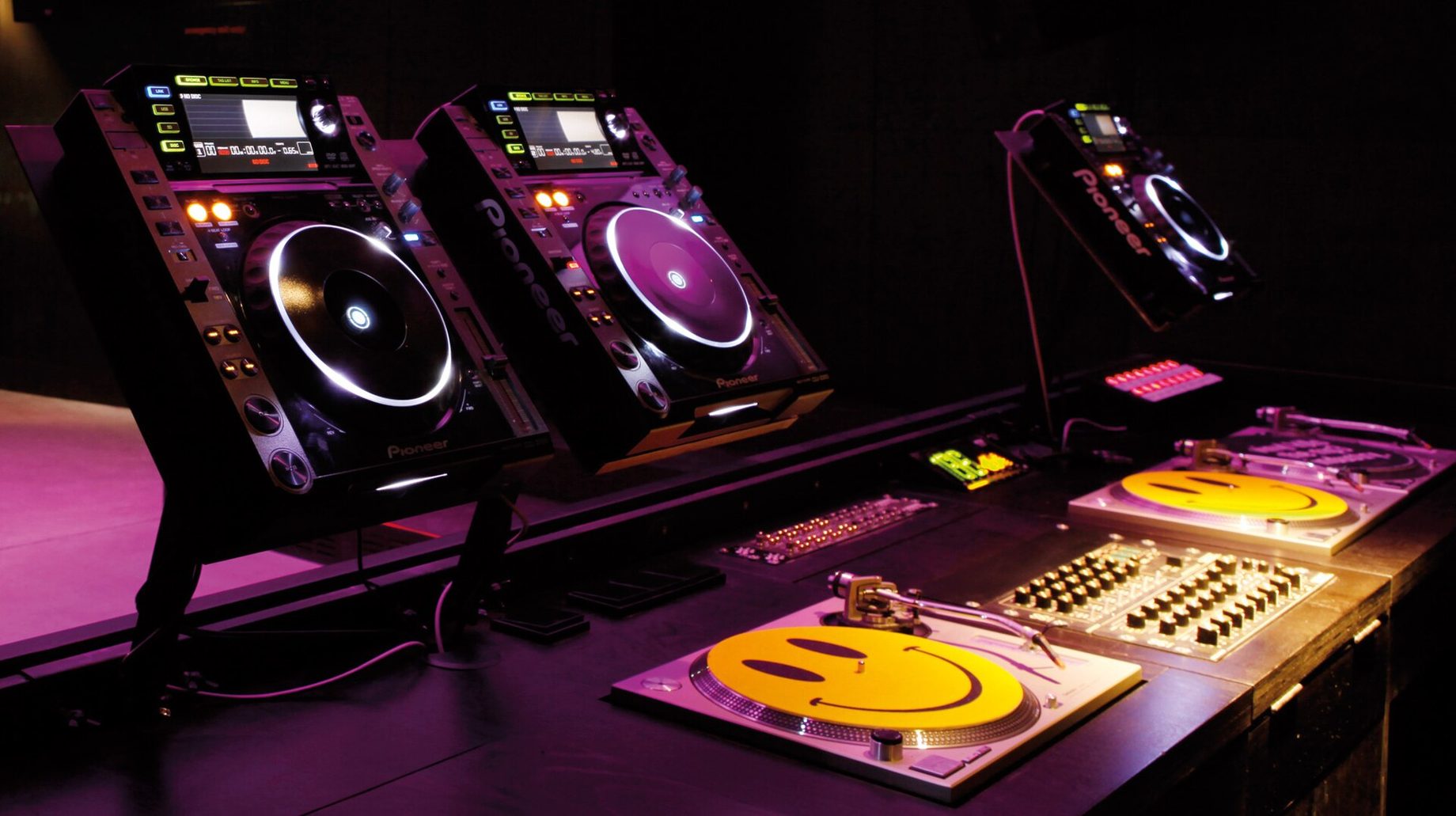
CD players and turntables side by side in a Munich club booth.
Photo: Arnold Jaeger Werner, CC BY 2.0, via Wikimedia Commons

Records that play a laptop
In 2004 Rane and Serato launched Serato Scratch Live. A control record on each turntable plays the files on a laptop, so a DJ keeps the feel of vinyl and carries a whole library in a bag. For a generation of hip-hop DJs it became the standard setup.
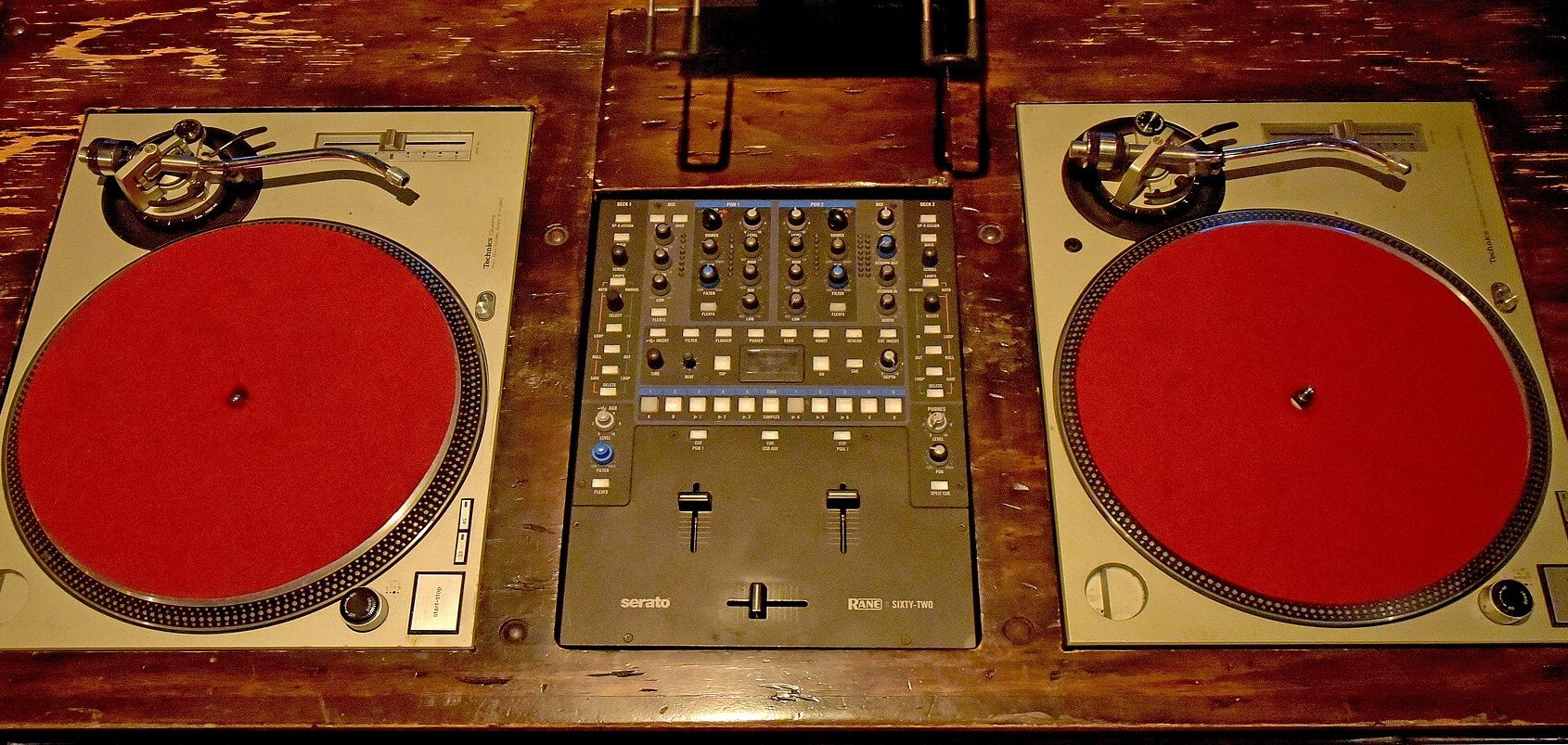
Two Technics SL-1200 MK2s and a Serato mixer, the setup of the digital vinyl years.
Photo: Glenn Francis, CC BY-SA 4.0, via Wikimedia Commons (cropped)

Stems, and the drummer comes back
In December 2022 Serato added real-time stems to Serato DJ Pro and Lite 3.0: pull the vocal, the drums or the melody out of any track while it plays. It’s the newest way to do what Herc did in 1973, give the floor more of the part it came for.
And the records Herc played, cut by live drummers who never heard a click track, are exactly the ones Serato DJ 5’s flexible Lucid Beatgrids are built for. More on that in our Serato DJ 5 article.
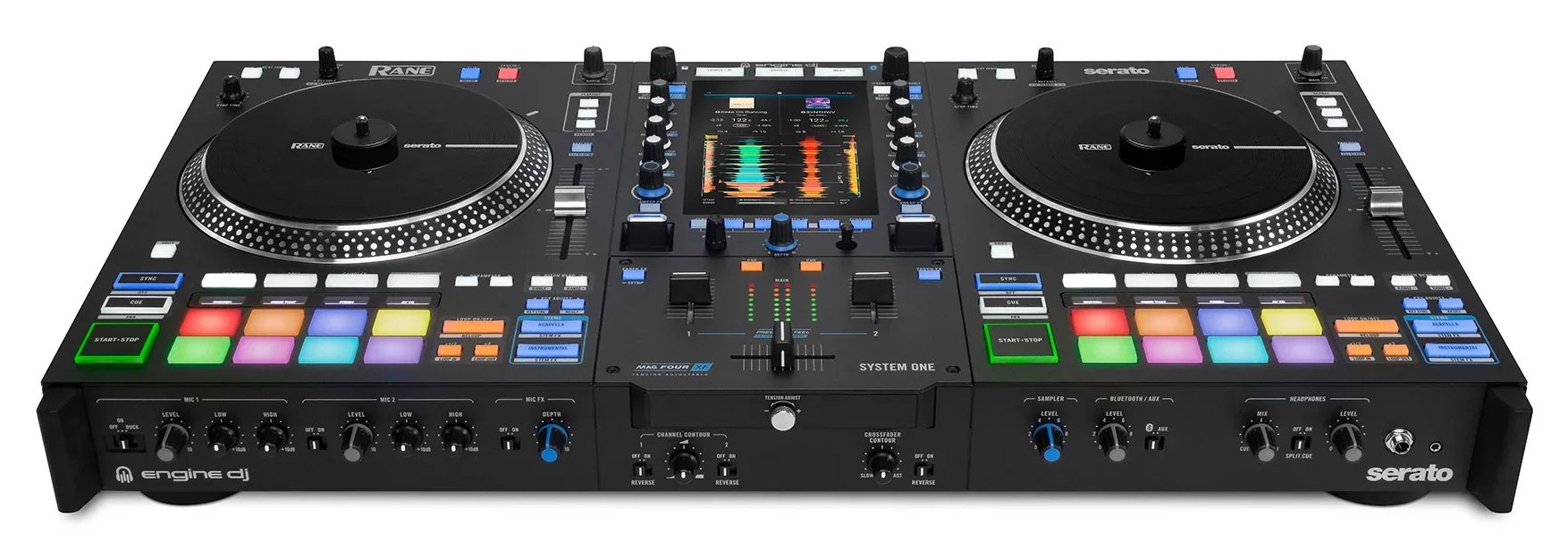
A RANE System One. Motorised platters, performance pads and a mixer in one unit.
Image: RANE
Sources
- 1520 Sedgwick Avenue, Wikipedia.
- Grandmaster Flash, Wikipedia: the Quick Mix Theory, punch phrasing, scratching on record.
- Technics SL-1200, Wikipedia.
- Roland TR-808 and Akai MPC, Wikipedia.
- CDJ, Wikipedia.
- Honoring the Past, Welcoming the Future, Serato: Scratch Live with Rane in 2004.
- Serato DJ Pro and Lite 3.0 with Stems launches, Digital DJ Tips, December 2022.