 CrateEdit Pro
Stem separation, tested: how it works and where it breaks
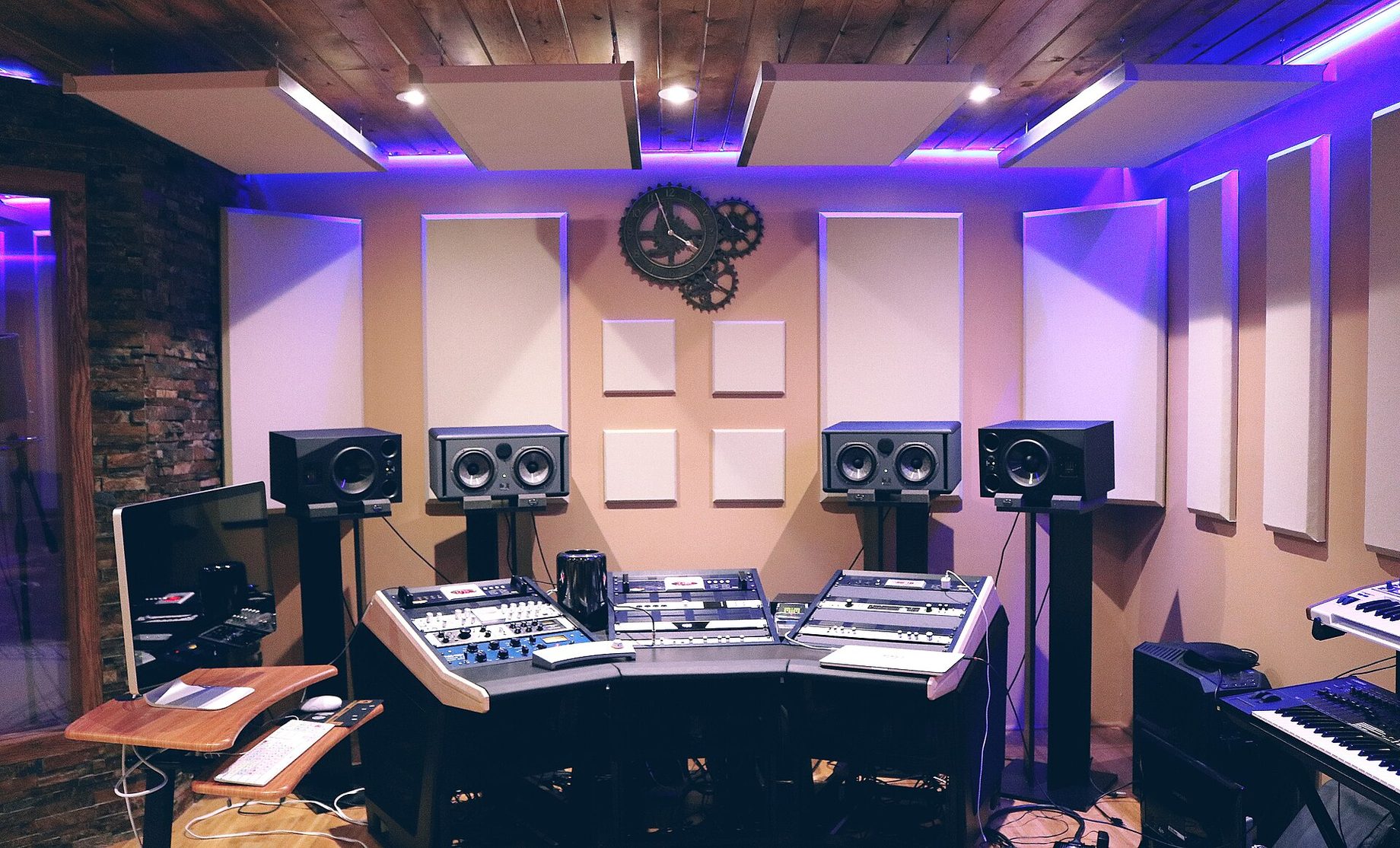
Four stems from one file. What the model hands back is a guess, and some guesses are better than others.
Photo: Dayron Villaverde, CC0, via Wikimedia Commons

Stems are in every DJ app now: mute the vocal, keep the drums, play the bass line alone. We ran an open stem model over 20 tracks and measured what each stem got, from house to 808 hip-hop to 1960s soul. Here’s how it works, where it’s clean, and where it breaks.
How a stem model works
A stem model is a neural network trained on songs whose parts were recorded separately. It learns what drums, bass and vocals sound like, and for a new song it guesses which part of the sound belongs to which. There’s no hidden multitrack in your MP3: every stem is the model’s best guess, rebuilt from the mixed sound.
We tested HT Demucs, an open model from Meta’s research team, released under the MIT licence and no longer maintained since January 2025. It splits a track into four stems: drums, bass, vocals and other. Its authors measured 9 dB of separation quality on the standard test songs, the best score at the time. Serato’s own stems, since Serato DJ Pro 3.0 in December 2022, are vocals, melody, bass and drums, from Serato’s own model, which we didn’t test.
The test
- 20 tracks, 90 minutes in all: house, dance pop, reggaeton, hip-hop with 808s, twerk remixes, two-song blends, and soul from the 1960s and 1971.
- One Mac, an M4 Max. All 90 minutes split in 84 seconds, about 65 times faster than playing them.
- What we measured: how loud each stem is, moment by moment and in five frequency bands, and how close the four stems come to the original when you add them back together.
Where it’s clean
The stems add back up. On every track the four stems summed came within 24 to 30 dB of the original, so what’s missing is well under one percent of the sound. Mute nothing and you hear the track.
A vocal on its own stays on its own. One track opens with an a cappella intro. For those first seconds the drums stem sits about 46 dB below the track and the bass stem about 56 dB below: next to silence. When the beat drops, each stem takes its part.
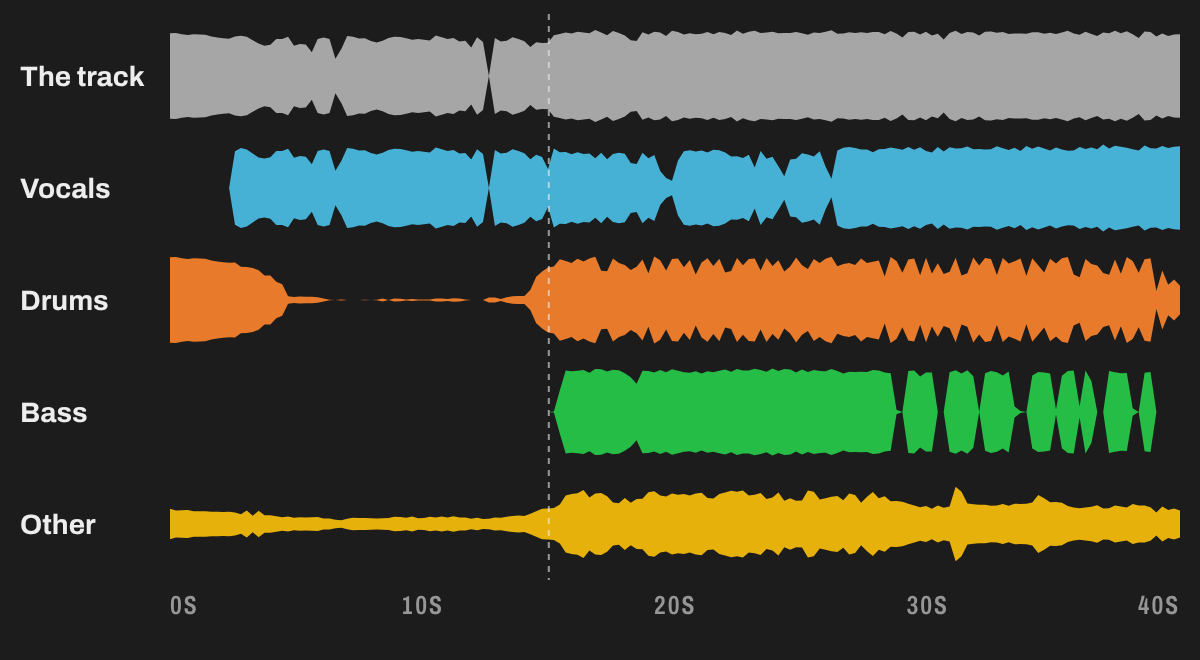
An a cappella intro, split. The first 40 seconds of Megan Thee Stallion’s Accent (an intro edit): each band is a stem’s level, over 60 dB. The beat comes in at the dashed line. Drawn from our measurement.
Where it breaks: the low end
The lowest notes, under 60 Hz, are where the kick and the bass overlap, and the model has to decide who owns them. How it decides depends on the track.
| Track | Kind | Low end in the drums stem |
|---|---|---|
| Xpansions, Move Your Body | House, 1990 | 95% |
| Zhané, Hey Mr DJ (redrum) | R&B with added drums | 97% |
| Technotronic, Pump Up The Jam | Hip house, 1989 | 98% |
| Kahnti and DJ Spen, My Boo Thang | House | 91% |
| Don Omar, Sexy Robotica (remix) | Reggaeton house remix | 87% |
| Lali, Caliente | Latin pop | 81% |
| Masaki Morii, Sundance | House | 73% |
| Calvin Harris and Dua Lipa, One Kiss | Dance pop | 59% |
| Marvin Gaye, Inner City Blues | Soul, 1971 | 64% |
| Blueface, Thotiana (twerk remix) | Twerk | 35% |
| Drake, Rich Baby Daddy | Hip-hop, 808s | 22% |
| Soulja Boy, Donk (twerk edit) | Twerk | 15% |
| Megan Thee Stallion, Accent | Hip-hop, 808s | 13% |
| Otis Redding, I Love You More Than Words Can Say | Soul, 1960s | 5% |
| Ludacris, How Low | Hip-hop, 808s | 3% |
Who gets the lowest notes, under 60 Hz: the drums stem’s share, against the bass stem’s. 15 of the 20 tracks; the rest are in between. Our measurement, November 2026.
- House and four-on-the-floor: the kick owns the low end, and the drums stem gets most of it.
- 808 hip-hop and twerk: the 808 is a kick and a bass note in one sound, and the model mostly calls it bass. Mute the bass stem on these and the kick loses its boom; mute the drums and the boom stays.
- Old soul: the bass guitar owns the low end, as it should, and the drums stem is thin. On the Otis Redding record it held 2% of the sound; the kit sits low in that mix.
It can also change its mind inside one track. On a blend of two hip-hop songs, the first song’s low end went to the bass stem the whole way, while the second’s sat in the drums stem, except for two stretches where it swung back to bass.
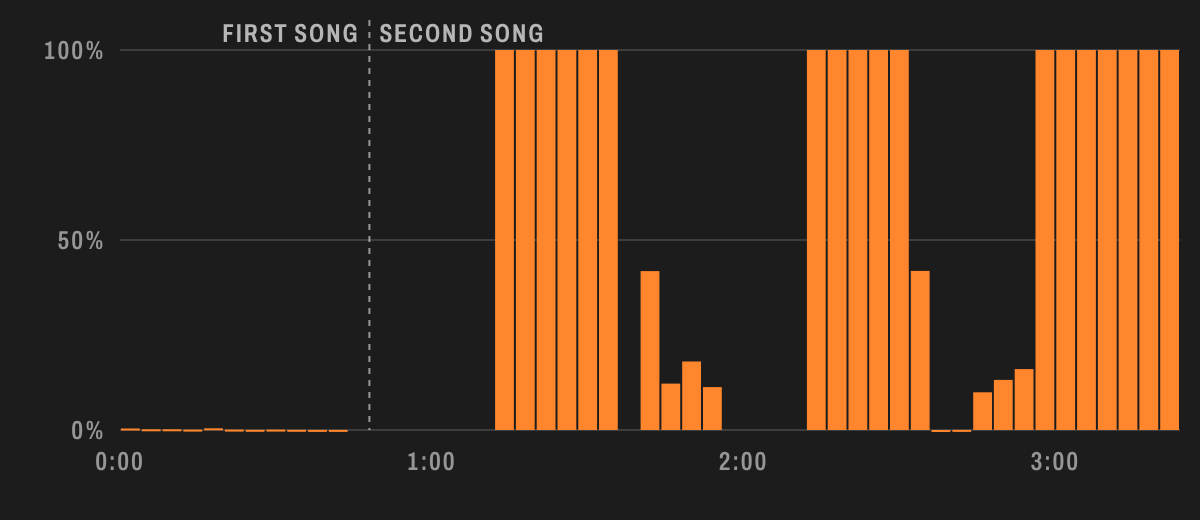
The same track, two answers. A blend of a J. Cole song into Drake’s Nice For What: the drums stem’s share of the lowest notes, every four seconds, quiet stretches left out. Drawn from our measurement.
What it means in a mix
- Acapella and instrumental tricks work best on tracks with a clear vocal over a clear beat. That’s where the stems are cleanest.
- On 808 records, treat drums and bass as one. Cut or swap them together, or the low end jumps from one deck to the other.
- Listen before the gig. A stem that changes its mind mid-track is easy to miss in headphones and obvious on a club system. Try the exact moment you plan to use.
- Old records split worse than modern ones: the parts bleed into each other on the original tape, and the model can’t take back what was recorded together.
If you prep with CrateEdit Pro
Kick-Lock uses the same model to pull out the drums, then snaps the beatgrid to the kick, one track at a time, on macOS 14 or later. It runs on your Mac, with nothing uploaded. It’s with the other grid tools on our Features page.
Sources
- Our measurement: 20 tracks, HT Demucs through demucs-mlx, on a Mac with an M4 Max, November 2, 2026.
- Hybrid Transformers for Music Source Separation, Rouard, Massa and Défossez, November 2022.
- Demucs, Meta Research on GitHub: the four sources, the MIT licence, archived January 1, 2025.
- Serato Stems lets you isolate instruments from your music in real time, MusicTech, October 5, 2022.
- Serato DJ Pro and Lite 3.0 with Stems launched today, Digital DJ Tips, December 5, 2022.