 CrateEdit Pro
Getting more gigs: mixes, socials and a press kit bookers actually open
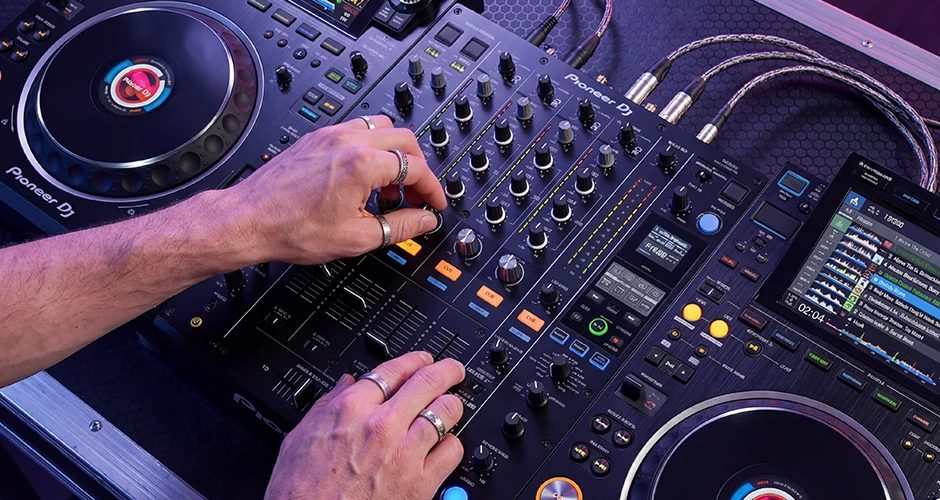
The booth is the easy part. Getting asked back is the job.
Image: AlphaTheta
Most bookers decide in a minute or two. They skip through your mix, glance at your page and look for a way to reach you. Here is what they check in that minute, how long the mix should run, and the one page that gets you called back.
What a booker checks first
- Can you mix? Digital DJ Tips’ long-time advice still holds: promoters listen to the first few transitions, and if those are clean, they skip ahead to hear what you play.
- Do you fit the night? A Friday house room and a Sunday brunch want different DJs. A mix built for the slot beats your best mix for a different one.
- Will people come? A booker wants to know you’ll bring a few people and post about the night.
- Can they reach you? An email address and a phone number, on the first screen. A kit with no way to book you is a dead end.
The mix
Make it 30 to 45 minutes for a club or bar booker: long enough to show you can build energy, short enough for someone with a full inbox. Digital DJ Tips puts the floor at 30 minutes, because a 20-minute mix doesn’t show what you do across a set. Wedding and private clients are different: they want to hear that you can read a room, so a short highlights mix and a list of songs you play work better than an hour of club tracks.
| For | Length | What it shows |
|---|---|---|
| Club or bar booker | 30 to 45 min | clean blends early, a build, the sound of the slot |
| Opening slot | 30 to 45 min | a warm-up that leaves room for the headliner |
| Wedding or private client | 10 to 20 min, plus a song list | that you read a room across styles |
| Socials | 15 to 60 sec | a real floor reacting, from a real gig |
How long a mix should be, by who it’s for.
- Front-load it. Put your cleanest blends in the first five minutes. That’s the part everyone hears.
- Record it live. One take, real transitions. A booker can hear an edited mix, and the gig won’t be edited.
- Name it for the slot. “Open format warm-up, 95 to 120 BPM” tells a booker more than “Mix #7”.
- Use a mix site. Mixcloud is built for DJ mixes. Send a link, not an attachment.
- Clean files, clean sound. A fake 320 sounds dull on a club system, and a booker who listens on good speakers will hear it.
Socials that work for bookings
Bookers look at your page to see two things: that you play out, and that people show up. Short clips from real gigs do both. A 20-second video of a full floor reacting to your drop is worth more than a polished studio post. Pin your best mix and your next date to the top, and when you’re booked, post the flyer and tag the venue. Promoters remember the DJs who help sell the night.
The one-page press kit
A press kit, or EPK, is a page that answers a booker’s questions before they ask. Keep it on one web page, not a PDF in an email, so it’s always up to date and one link away.
| Part | What to put in it |
|---|---|
| Name and sound | one line: who you are and what you play |
| Bio | three or four sentences, third person |
| Mixes | two or three links, each named for a kind of night |
| Photos | two of you playing, one portrait; free to use |
| Where you’ve played | venues and nights, latest first |
| Clips and socials | your pages, and two short videos of real floors |
| Tech rider | what you play on, what you need in the booth |
| Contact | email and phone, at the top and the bottom |
The one-page kit, top to bottom.
Two things people leave out: the tech rider (what you play on and what you need in the booth) and how to reach you. Both save a booker an email.
The ask
Look past clubs. Hotels, restaurants, rooftops, gyms and shops book DJs too, and fewer DJs ask them. Go in person if you can, ask for the person who books music, and leave a link or a USB with a mix built for their room. DJcity’s advice is to set the lowest rate you’ll take before you walk in, and to be willing to start near it.
A short message works when you can’t go in:
“Hi, I’m a DJ in [city] and I play [the sound] for [the kind of night]. Here’s a 40-minute warm-up mix made for a room like yours: [link]. My kit with dates and contact is here: [link]. I’d love to play a [night] for you.”
Getting asked back
The second booking is easier than the first. Arrive early. Play to the night you were booked for, not the set you wanted to play. Keep the levels out of the red. Thank the promoter, then post the night. Every set is a live audition for the next one.
If you prep with CrateEdit Pro
A booking is a crate. Set Builder puts one in the order that mixes best for the energy you choose, Next Track finds what fits after the song that’s playing, and Batch Grid Quality flags the fake 320s before they reach a club system. Our guide to prepping a Serato crate has the steps.
Sources
- How to succeed at DJing, part 9: get a demo and press kit, D-Jam, Digital DJ Tips, updated April 5, 2018.
- How long should a DJ mix be?, DJ Will Gill, updated August 29, 2026.
- How to make a DJ press kit (EPK), Hypebot, from Bandzoogle, February 29, 2024.
- Who actually reads your EPK, ArtistPR.
- 5 tips to help you land more DJ gigs, DJcity.